Construction & Design
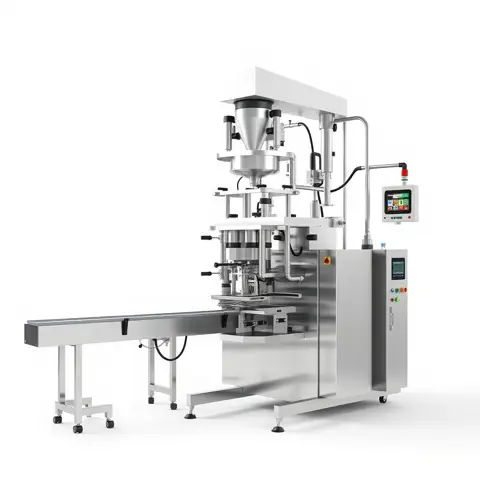
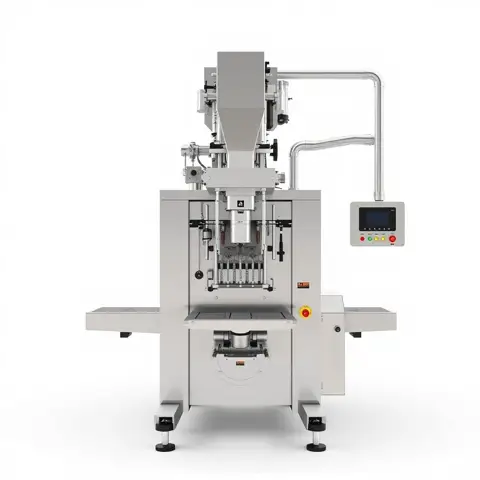
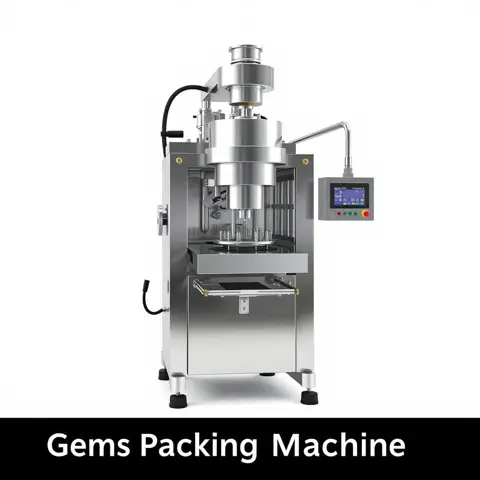
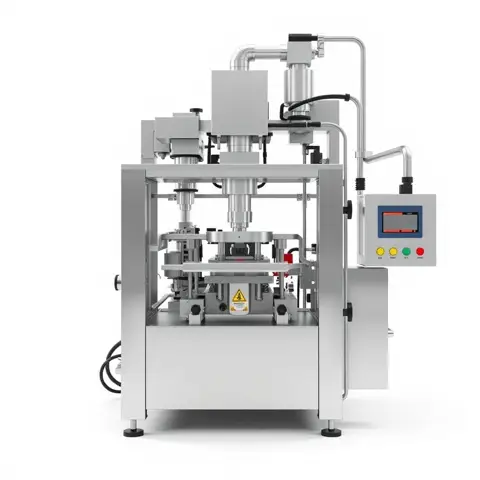
The construction of a peanuts pouch packing machine is planned around continuous packaging operations and convenient access to the major working sections. Product-contact components can be selected according to the nature of the application and packaging requirements.
The overall arrangement generally brings together the product feeding mechanism, dosing or weighing section, pouch-handling arrangement, sealing unit, and machine controls. The design can vary depending on whether the buyer requires a particular pouch format, filling range, or level of automation.
For food-packaging applications, the machine configuration should be selected with consideration for product handling, cleaning requirements, packaging-film compatibility, and the operating environment.
Working Process
The packing process begins when peanuts are supplied to the machine's product feeding section. The product is then directed toward the dosing or weighing arrangement, where the required quantity is prepared for filling.
The measured peanuts are transferred into the pouch according to the selected machine configuration. Once filling is completed, the pouch is positioned for sealing. The sealing unit closes the package to create a finished pouch ready for subsequent handling, inspection, secondary packaging, or dispatch.
The exact sequence can vary depending on the machine model, pouch format, filling mechanism, and level of automation. Buyers should provide their product and packaging details so the appropriate configuration can be established.
Industrial Applications
A peanuts pouch packing machine can be used in packaging operations such as:
-
Peanut processing and packaging units
-
Snack food manufacturing facilities
-
Roasted peanut packaging
-
Food-product repacking operations
-
Namkeen and snack production units
-
Retail food packaging
-
Dry granular food-product packaging
-
Contract and private-label food packaging
The machine may also be suitable for other compatible granular products when the filling mechanism and packaging configuration are appropriate.
Key Benefits
Automating peanut pouch packing can reduce repetitive manual handling and create a more structured packaging workflow. The machine helps integrate filling and sealing activities within one coordinated operation.
Other practical benefits include improved consistency in routine packing operations, easier integration with an existing packaging line, reduced dependence on manual pouch handling, and the ability to configure the system around specific pouch and filling requirements.
For procurement teams, selecting the correct configuration is particularly important because product characteristics and packaging specifications directly influence the suitable feeding, dosing, and sealing arrangement.
Performance & Reliability
Reliable packaging depends on appropriate machine selection, correct configuration, proper installation, and regular maintenance. Peanut size, shape, surface characteristics, pouch material, filling quantity, and operating conditions can all influence the performance of the packaging system.
Routine cleaning and inspection of product-contact and sealing areas can help maintain consistent operation. Operators should follow the manufacturer's recommended procedures for setup, adjustment, maintenance, and safe operation.
Before purchasing, industrial buyers should confirm the required filling range, pouch dimensions, packaging material, product characteristics, electrical requirements, and desired automation level with the supplier.
Why Choose Durga Packaging Machine?
Durga Packaging Machine provides packaging machinery for different industrial product and packing requirements. For peanut packaging applications, the machine configuration can be discussed according to the buyer's product, pouch format, filling quantity, and operating requirements.
As Peanuts Pouch Packing Machine Manufacturers in Pali, Durga Packaging Machine can support buyers in evaluating the appropriate machine arrangement rather than relying on a one-size-fits-all configuration. Customers can communicate their product details and packaging objectives to determine suitable machine specifications.
For manufacturers, food processors, exporters, and procurement teams, providing accurate product and pouch information before ordering helps establish a practical machine configuration for the intended packaging operation.